The Authentic Orthography
Ὄλυμπος Ólympos
Home of the Gods · The Heavenly Mountain · Throne of Zeus
The Authentic Orthography
Home of the Gods · The Heavenly Mountain · Throne of Zeus
Why ólympos.com is the correct form
Ὄλυμπος
The name in its original Greek form. The rough breathing on the initial vowel and the acute accent mark the true Attic pronunciation. This is the mountain Homer sang into eternity — the seat of the immortals.
OLYMPOS
Stripped of its Greek identity, the name was reduced to six Latin letters. Sports brands, tech companies, and modern geography claimed it. The breathing, the accent, the divine resonance — all erased.
Ólympos
The acute accent on the initial omicron restores the stress placement of the original Greek. This is not decoration — it is philological accuracy. The domain encodes to Punycode, but the browser displays the truth.
ólympos.com → xn--lympos-9wa.com
The non-ASCII character ó (U+00F3) is encoded while the ASCII remains visible. To the DNS, it is Punycode. To humanity, it is Ólympos.
How the mountain was truly spoken
Where earth touches heaven
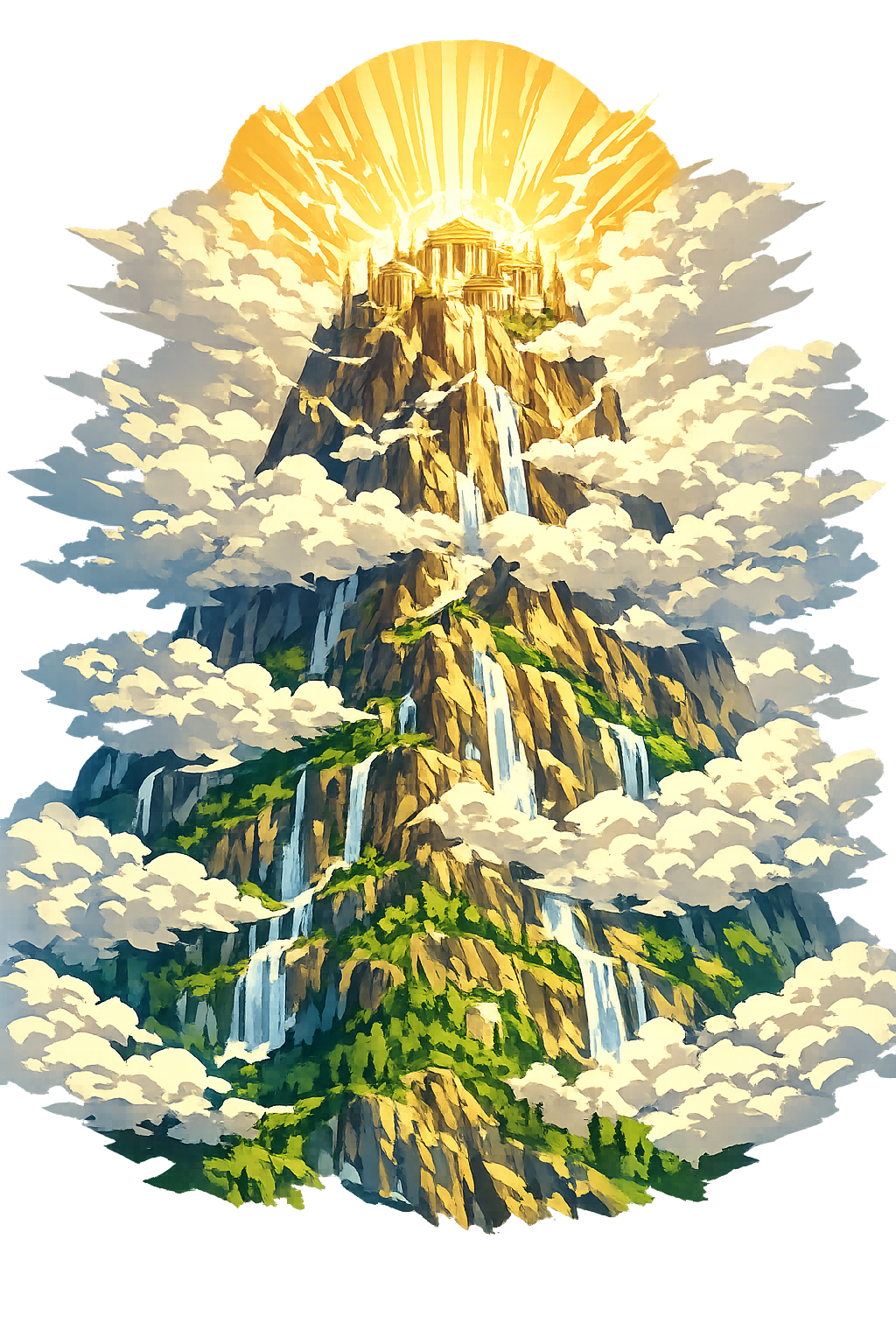
Mount Olympus in Thessaly rises 2,917 metres into the Greek sky — the highest peak in the land. But the mountain of myth is far taller. It is the mythological peak above the clouds where the gods dwell in undying splendour, looking down upon the affairs of mortals with divine detachment and occasional intervention.
At the summit stands the bronze-floored palace of Zeus, where the king of gods holds court and thunders his judgments across the cosmos.
Twelve golden thrones encircle the divine council hall. Each Olympian has their seat, and none may usurp another's place in the celestial order.
The Pylai — cloud-gates of thick mist — guard the mountain's approaches. Only the divine may pass freely; mortals who attempt the ascent risk hubris.
Beneath the mountain, or within it, the smith-god tends his volcanic workshops — crafting armour for heroes and thunderbolts for the king.
Stories forged at the summit of the world
The gods gather in Zeus's great hall to deliberate the fates of mortals and immortals alike. Here Hera speaks with queenly authority, Athena offers counsel with owl-eyed wisdom, and Poseidon thunders dissent when the sea is slighted. No decision affecting the cosmos is made without this assembly — Olympus is not merely a residence, it is the capital of divine governance.
For ten years, the Olympians battled the Titans from Mount Olympus against Mount Othrys. Zeus freed the Cyclopes and the Hecatoncheires from Tartarus, and in gratitude they forged his thunderbolt. The war ended with the Titans cast into Tartarus, and the younger gods claimed Olympus as their eternal seat — the fortress of the new divine order.
Beneath Olympus, or within its smoking heart, Hephaestus tends his forge. Here he crafted Achilles' immortal armour, the shield that depicted the whole world in bronze. Here too he forged the thunderbolts that Zeus hurls from the summit — each one a shaft of divine fire that none may withstand. The mountain breathes smoke; the mountain creates war.
From Olympus, the gods observe the world of men. They see the Trojan plains, the Greek cities, the wine-dark sea. They intervene — sending dreams, shaping storms, granting victory or ruin. The mountain is not separate from human affairs; it is the vantage point from which all affairs are judged. No prayer rises unseen from earth to Olympus.
Proud Bellerophon, tamer of the winged horse Pegasus, attempted to fly to Olympus itself. He soared through the gates of cloud, higher than any mortal had dared — until Zeus sent a gadfly to sting Pegasus, casting the hero back to earth. The mountain is for the gods alone. Mortals who reach too high are reminded of their place.
The Twelve Olympians who dwell on the mountain
* Hestia, goddess of the hearth, sometimes replaces Dionysos among the Twelve, depending on the source.
Attested forms across tradition
Ólympos is the mountain that anchors the entire Greek pantheon. The seat of the gods, the summit of myth, the place where heaven and earth divide. But it is not alone. Across the encoded web, the authentic names of gods, heroes, and sacred places have been restored — each with its own domain, its own lore, its own truth.
This is not a directory. This is a resurrection.
Enter the Codex
See how Ólympos behaves in the PUNYCODEX Type Tool — with predictive autocomplete, character-by-character breakdown, and scholarly constraint validation.
olympos
→
Ólympos